


A Conversation With The Fund Manager,
Adrian Courtenay
“Markets reward those who allocate where the laws of physics, economic incentives, and human organisational dynamics converge. Our work is to identify those points of convergence — and through them to compound unit holder capital with conviction.”
Adrian Courtenay
What inspired you to pursue a career in hedge funds?
I read biosciences at Oxford and chose finance over academia with a scientist’s instinct — treating investing as a discipline in which durable advantage could be engineered. I spent close to fifteen years as a deep-dive analyst — first at Tisbury Capital (a Citadel spin-off) and then in the Special Situations Group at D.E. Shaw — before running capital independently. The deferral was deliberate. Whilst investing has a natural-talent dimension, tournaments are won by martial artists, not by natural fighters; the discipline and frameworks are what build and compound.
What ultimately drove the decision to launch the fund in October 2019 was a structural observation. Periodic market crashes of 30–50% routinely coincide with personal liquidity stress for unit holders — redundancies, mortgage pressure, school fees — forcing them to crystallise losses at precisely the wrong moment. Even a well-performing fund, albeit unhedged, can therefore deliver a poor experience to the average unit holder. Closing that gap, through a structure aligned with unit-holder interests across the full market cycle, is the problem the GA-Courtenay Special Situations Fund was built to solve.
What does the fund actually do?
The GA-Courtenay Special Situations Fund is a UCITS hedge fund built around a unique architectural insight: that long exposure to dominant, future-facing businesses can be combined with always-on, positive-carry hedging to deliver strong absolute returns while remaining structurally de-correlated from broad equity markets.
Three books operate in concert. A concentrated long equity book holds dominant businesses leading industries undergoing some form of upward transition. A merger arbitrage book generates yield from short-duration, contractually protected positions. That yield also funds a permanent S&P 500 put option overlay which is also combined with selected short equity positions albeit few in number. The result is leveraged participation in the upside, paired with cost-efficient defence against market dislocation. The hedge is designed not to drag on long-term performance but to pay for itself.
What is the track record?
Since inception in October 2019, the fund has compounded at more than 10% annualised, net of fees, with low equity correlation (R² of 0.10) and a Sortino ratio in the top third of UCITS funds. The exact performance figures are kept up to date regularly on the Performance section of this website. In April 2025, The Hedge Fund Journal recognised GA-Courtenay Special Situations as the best-performing event-driven UCITS hedge fund over the trailing five-year period.
Why a positive-carry hedge rather than a conventional short equities book?
The key point is, that over most periods, a well selected, long-only fund is the optimal model; yet over rare periods, a long-only fund is extremely costly. And this dynamic describes the challenge, how should a fund architecture a hedge which does not drag on performance relative to a long-only fund, at the same time as providing ample protection during periods of market distress?
Our answer is firstly to pair merger arbitrage — short-duration, contractually protected, low market correlation — with S&P 500 put options. Arbitrage yield typically exceeds financing costs over 6-18 month periods, generating positive carry. A portion of that excess funds the put protection. Secondly, if we can find excellent single stock short opportunities, we will add them to the hedge, albeit we feel no pressure to do so.
Overall, the design aims for the fund to therefore be hedged without paying for protection on a net basis. During the 2020 COVID shock, the structure preserved capital where the unhedged equivalent and the index itself fell sharply.
What kind of businesses do you invest in?
The fund targets monopolistic or close businesses with enduring barriers to entry, positioned within industries undergoing at least some degree of positive transition. Barriers to entry — technological, regulatory, scale-based, or network-driven — are a decisive determinant of success in growth investing. In their absence, prospective value capture invites pre-emptive denial by emergent competitors, and the probability of impairment rises materially.
The portfolio holds two categories. High-quality compounders — GE Aerospace, Formula One, Enterprise Product Partners — anchor the equity book with durable cashflow and industry tailwinds. Breakthrough companies — SpaceX, Kraken Robotics, Tesla, ImmunityBio — capture asymmetric upside from technological inflection points. Across both, the same filter applies: dominance now, structural attributes that make dominance durable, and favourable industry tailwinds.
What are the fund’s largest holdings and why?
The fund’s largest allocations cluster around what we term the Elon Musk complex: a set of listed securities whose forward economic trajectory is coupled, directly or indirectly, to the business activities of a single individual. The organising insight is that Musk companies stand dominant at the centre of several reinforcing transitions at once — orbital launch, autonomy and electrification, and the advanced silicon that underpins both — and that the resulting value is unusually durable and unusually concentrated. Several of these holdings are independent companies, yet their future cashflows are increasingly a function of the same gravitational centre.
That centre is SpaceX — held directly by the fund — which we regard not as a participant in the space economy but as its central bank, a systemic cost-setter for an entire economic domain. By lowering the cost of mass to orbit some sixty-five-fold relative to legacy expendable systems, with a further order of magnitude targeted, SpaceX has expanded the frontier of what is orbitally viable and concentrated the resulting economics into one firm. The additional question is what further listed securities can capture the gradient of an industry now substantially synonymous with Musk’s enterprises.
EchoStar offers the most direct route — asset-backed, deeply discounted exposure to SpaceX equity itself. Filtronic provides scaling operational exposure to the SpaceX ecosystem, as monopoly supplier of E-band solid-state power amplifiers at the Starlink ground stations chokepoint. Tesla is direct listed exposure to a second Musk-led compounder, spanning autonomy, energy and robotics. And ASML enters the complex on a forward basis: as sole gatekeeper to leading-edge lithography, its order book is becoming structurally coupled to Musk’s stated semiconductor ambitions, with the Terafab project, a SpaceX/Tesla joint venture, alone implying demand for its advanced fabrication capacity at a multiple of present output.
Each holding is a distinct route to the same objective — capturing the trajectory of the Musk complex through public markets. Our SpaceX thesis is set out in our January 2026 white paper, SpaceX, the Central Bank of the Space Economy — and Its Public-Market Proxies.
What is the Superorganisation framework?
A Superorganisation is that rare class of company in which exceptional leadership, workforce excellence and corporate design combine to catalyse high-productivity and extraordinary long-term outcomes. The framework — first presented in my 2025 book The Super Organisation Secret, publicly recognised by the President of Orbis Investment Management as “superb” — identifies five pillars whose joint presence makes extraordinary corporate productivity highly probable: exceptional leadership and workforce, scale beyond individual capacity, specialised division of labour, efficient coordination, and non-linear advantages. A sixth pillar, addressing AI-era displacement risk, is held proprietary.
The utility of the framework is not simply descriptive but also predictive. It identifies, ex ante, the organisational forms whose internal dynamics also underpin the form of productivity that drives technological phase transitions.
What is the fund’s framework for industry forecasting?
The fund’s framework also targets a prediction of which industries possess the highest probability of enduring, high growth tailwinds — and which do not. Extrapolation alone is insufficient. Accurate prediction requires three conditions: an initial orientation possessing momentum, an absence of interference, and the presence of reinforcement.
Initial orientation with momentum is concurrent with phase transition — moments where technological development shifts rapidly and irreversibly, rather than progressing along a gradual curve. Absence of interference requires that the trajectory remains compatible with the laws of physics, economically viable from first principles, and unlikely to provoke regulatory blockade. Reinforcement arrives through recursive self-improvement, regulatory acceleration, the presence of Superorganisations driving the transition, and the financial magnetism of a sufficiently large addressable market. When all three conditions hold, what is predicted to happen becomes what will happen. The framework is set out in the fund’s March 2026 white paper, A Unified Framework For Modelling the Future.
How are these frameworks applied in practice?
Through structured assessment and in-house proprietary systems. Each prospective Superorganisation is scored against 91 sub-criteria across the five disclosed pillars and the proprietary sixth. Each prospective industry forecast is scored against 28 sub-criteria covering orientation, interference, and reinforcement. The frameworks are not heuristics applied loosely; they are systematised to produce comparable scores dynamically across the opportunity set.
SpaceX scores at the leading edge across both frameworks. The use of our frameworks also generalises, and has also identified listed monopoly suppliers to high-growth private ecosystems, for example Kraken Robotics as a supplier to Anduril, in this case capturing the upside of military and defence transitions.
What happened in 2023, and what changed?
In 2023, the fund’s financing and derivative arrangements were withdrawn following disruption at its prior house, Odey Asset Management. The interim period — from mid-2023 to mid-2025 — was conducted at low gross exposure, consistent with the fund’s absolute return mandate, while infrastructure was rebuilt. Financing and derivative protection were fully re-established from the second half of 2025.
The episode tested and ultimately reinforced the fund’s infrastructure, counterparties, and risk discipline. The strategy now operates with a full toolkit deployed within a specialised, resilient and significantly enhanced framework. Nevertheless, the April 2025 Hedge Fund Journal performance recognition was still awarded during our disrupted period.
Who is the fund manager?
Adrian Courtenay, Managing Director and Head of Special Situations Strategy at Green Ash Partners. Adrian launched the fund in October 2019 at Odey Asset Management, before transferring it to Green Ash Partners in 2023. He previously held the role of Vice President in the Special Situations Group at D.E. Shaw & Co, and earlier positions at Tisbury Capital and Fortelus Capital. He read at Oriel College, Oxford, as a Scholar, graduating with a first-class MA. He is the author of The Super Organisation Secret (2025), which underpins aspects of the fund’s proprietary investment framework.
How can investors access the fund?
The GA-Courtenay Special Situations Fund is a daily-dealing, Irish-domiciled UCITS with GBP, EUR, CHF, and USD share classes. The administrator is US Bank, the auditor Deloitte, and the custodian European Deposit Bank.
For investors seeking concentrated exposure to the highest-conviction positions, Green Ash Partners also offers GA-Courtenay Javelin (segregated accounts) and selective seeder access to GA-Courtenay Focused. Full fund documentation, monthly factsheets, quarterly webinars, and white papers are available at www.greenash-partners-courtenay.com.
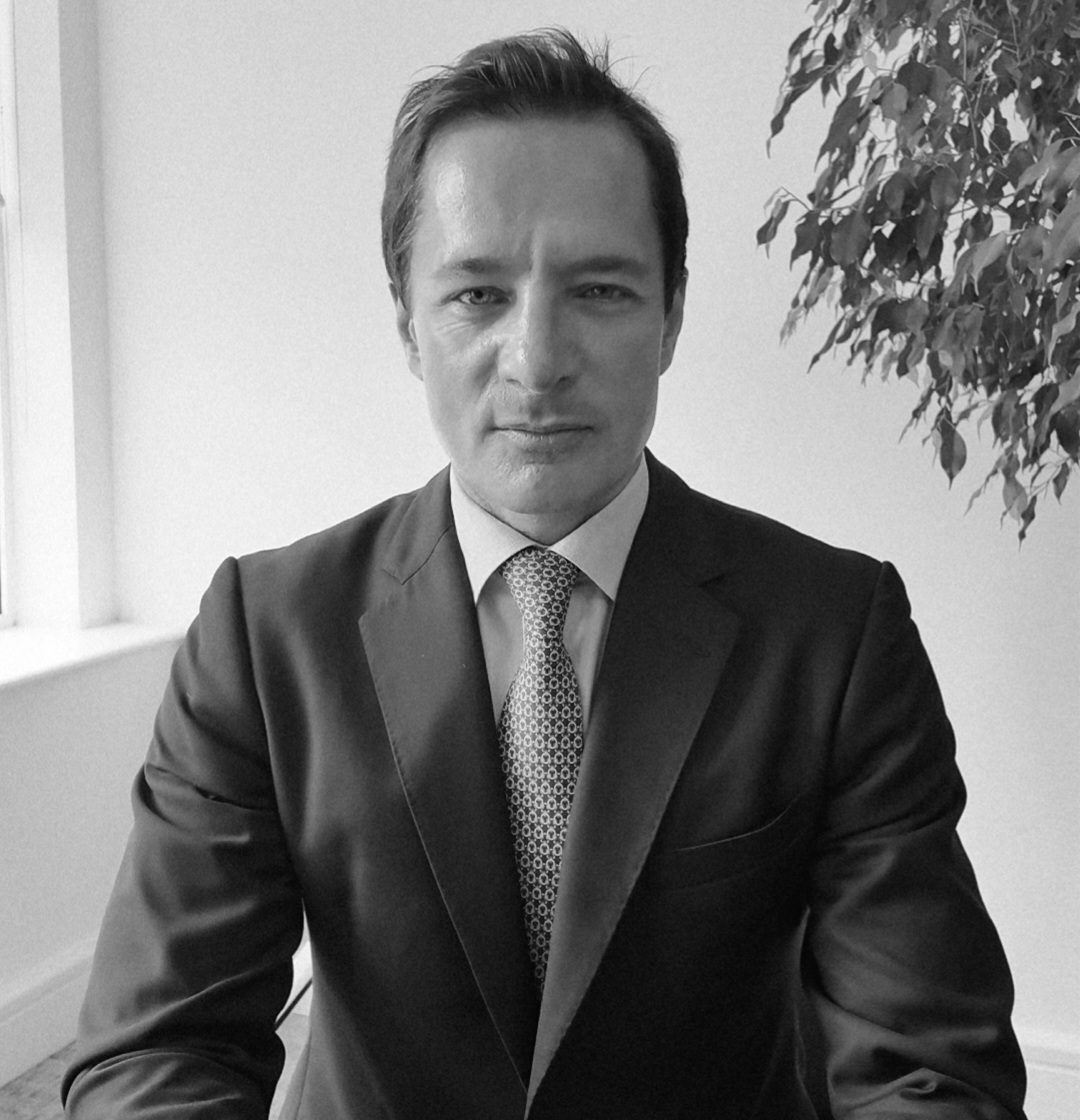
Managing Director and Head of Special Situations Strategy